
Qi2.2 bei 637 zertifizierten Produkten: Ein 25W-Ökosystem-Audit am Vorabend von Made by Google 2026
Zusammenfassung
- Die Zahl der Qi2.2-zertifizierten Produkte erreichte Ende Februar 2026 637, gegenüber 69 im August 2025 – ein ungefähr neunfaches Wachstum in sieben Monaten, wobei Januar 2026 den bislang größten Monatszuwachs verzeichnete.
- Die begrenzende Einschränkung ist thermischer, nicht elektrischer Natur. Qi2.2 verlangt eine Moduloberflächentemperatur unter 40°C bei 25W Nennleistung; diese Klausel ist der Grund, warum das zertifizierte Angebot weitaus langsamer wuchs als die unbestätigten 25W Marketingaussagen.
- Das Ökosystem hat nun ein erhebliches Ausmaß erreicht: Die Gesamtzahl der Qi2-zertifizierten Produkte belief sich Ende Dezember 2025 auf 2.665, die WPC-Mitgliedschaft umfasste im Januar 2026 328 Unternehmen, von denen über 91% auf Qi ausgerichtet waren, und zertifizierte Qi2.2 Powerbanks erreichten Ende Dezember 2025 64.
- Die Kategorienreife zeigt sich in den Härtefällen. Zertifizierte Produkte existieren nun auch in den thermisch am wenigsten nachgiebigen Segmenten – versiegelte Powerbanks und In-Car-Halterungen – und nicht nur in offen aufgestellten Desktop-Stationen.
- Kaufrahmenwerk: Vorauswahl nach Zertifizierungsklasse, dann Anzahl der Ladezonen, dann Eingangsleistung. Diese drei Kriterien eliminieren die meisten Kandidaten und stellen die teuersten Fehler dar, die rückgängig gemacht werden müssten.
1. 637 zertifizierte Produkte: Die Kurve lesen, nicht die Überschrift
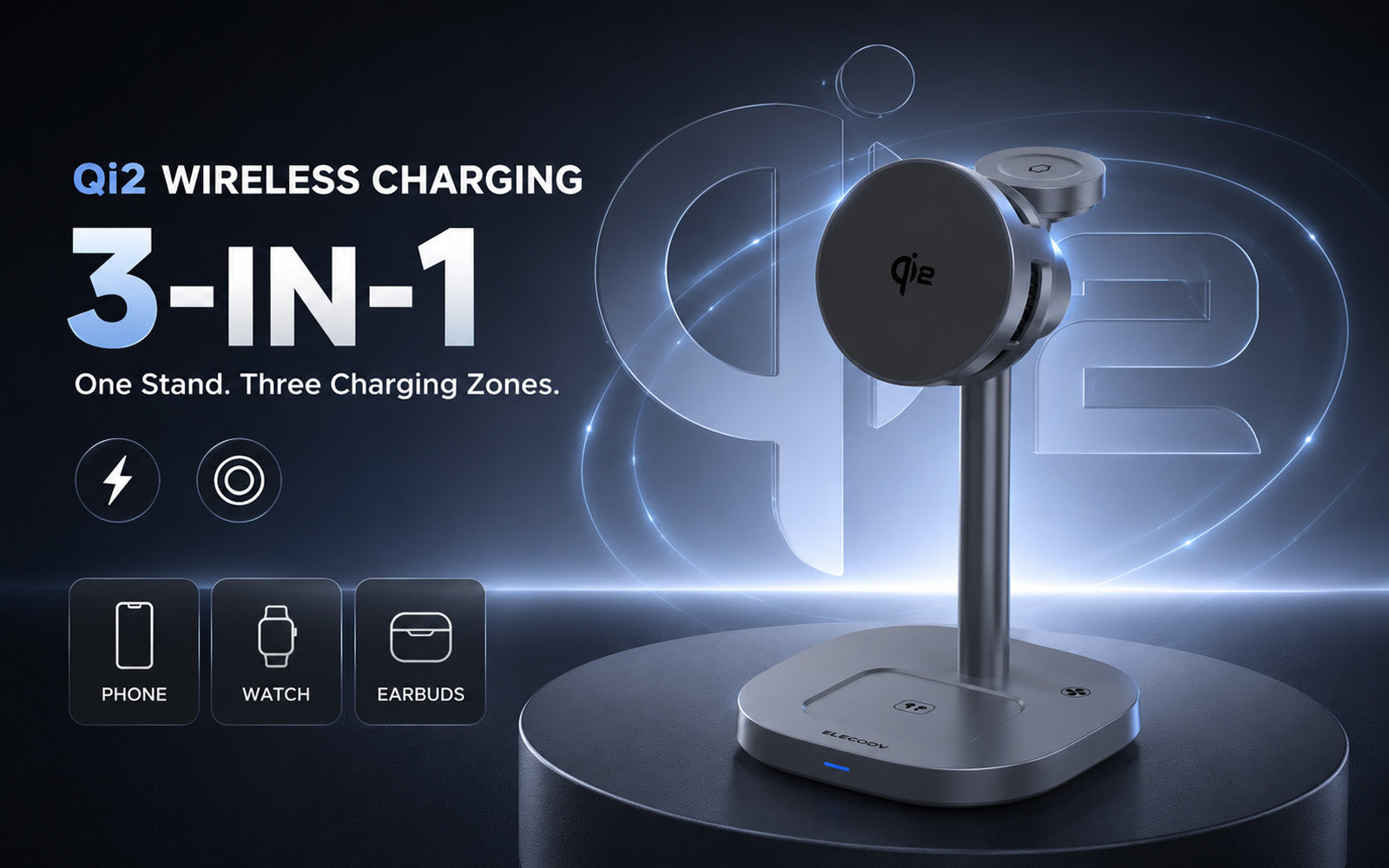
Sechshundertsiebenunddreißig. Das ist die Anzahl der Produkte mit Qi2.2-Zertifizierung Ende Februar 2026, und es ist der nützlichste Datenpunkt für jeden, der entscheiden möchte, ob das magnetische kabellose Laden mit 25W wirklich angekommen ist oder immer noch ein Early-Adopter-Angebot darstellt.
Die Zahl allein ist nicht die Geschichte. Die Form der Kurve ist es. Die Zertifizierung wurde im Juli 2025 eröffnet. Bis August 2025 gab es 69 Einträge. Bis Ende Oktober 203. Bis Dezember 342. Bis Januar 2026 521. Bis Ende Februar 637. Das ist eine etwa neunfache Expansion in sieben Monaten, und entscheidend ist, dass sich die monatlichen Zuwächse über den Winter hinweg beschleunigten statt stagnierten – allein der Januar 2026 trug den größten Einzelmonatsanstieg in der Geschichte des Programms bei.
Warum sich die Kurve zu diesem Zeitpunkt beschleunigte
Drei Kräfte konvergierten. Erstens, Siliziumverfügbarkeit: Zertifizierte Qi2.2-Sendermodule überschritten bis Mai 2026 zwanzig verschiedene Designs, was den Engpass bei Referenzdesigns für Zubehörmarken beseitigte. Zweitens, Ankergeräte: iPhone 16 und 17 Hardware-Klassen sowie das Google Pixel 10 Pro XL gaben der 25W-Kategorie echte Empfänger zum Laden, und ein Standard ohne Empfänger zieht keine Sender an. Drittens, Kategorienverbreitung: Das Profil war nicht länger eine reine Schreibtischlader-Geschichte. Allein Qi2.2-zertifizierte Powerbanks erreichten Ende Dezember 2025 64 Produkte, gegenüber 37 im November.
| Kontrollpunkt | Qi2.2-zertifizierte Produkte | Interpretation |
|---|---|---|
| August 2025 | 69 | Programmeröffnung – nur Early Adopters und Referenzdesigns |
| Ende Oktober 2025 | 203 | Erster Wendepunkt; Zubehörmarken engagieren sich |
| Dezember 2025 | 342 | Kategorienausbreitung beginnt – Powerbanks, Module, Autoladegeräte |
| Januar 2026 | 521 | Bislang größter Einzelmonatszuwachs; 500er-Marke überschritten |
| Ende Februar 2026 | 637 | Ökosystem wechselt von Early Adopter zu Mainstream-Verfügbarkeit |
🔧 Elecdov Ingenieurhinweis — Was die Zahl 637 Ihnen sagt und was nicht
Die Zahl zählt zertifizierte Einträge, nicht ausgelieferte Einheiten und nicht unterschiedliche Produktfamilien – Farb- und Regionalvarianten können separat erscheinen. Lesen Sie es als Indikator für das Vertrauen auf der Angebotsseite: 637 Einträge bedeuten, dass Hunderte von Ingenieurteams sich verpflichtet haben, einen Wärmetest zu bestehen, den sie hätten vermeiden können, indem sie stattdessen eine unzertifizierte 25W-Angabe auf den Markt gebracht hätten. Das ist das aussagekräftige Signal.
Q&A — Schnelle Antworten
F: Ist 637 eine große Zahl für einen Ladestandard?
A: Im Kontext ja. Die Gesamtzahl der Qi2-zertifizierten Produkte – einschließlich des gesamten magnetischen Profils mit 15W-Produkten – lag Ende Dezember 2025 bei 2.665. Dass Qi2.2 innerhalb von etwa sieben Monaten nach Programmstart 637 erreichte, stellt eine ungewöhnlich schnelle Akzeptanz für einen Standard mit einer zusätzlichen thermischen Anforderung dar.
F: Wann wurde die Qi2.2-Zertifizierung tatsächlich eröffnet?
A: Das Wireless Power Consortium veröffentlichte das Qi2.2-Profil im Dezember 2024 und eröffnete die Zertifizierung im Juli 2025. Das erste ausgestellte Zertifikat ging an ein magnetisches Ladeprodukt von UGREEN.
F: Führt eine höhere Zertifizierungszahl zu sinkenden Preisen?
A: Historisch korreliert ein breiteres zertifiziertes Angebot eher mit einer breiteren Preisspanne als mit einem einheitlichen Preisverfall. Was Käufer zuerst gewinnen, ist die Auswahl über Formfaktoren – Desktop-Stationen, faltbare Reiseständer, Powerbanks und Kfz-Halterungen – und nicht ein sofortiger Rabatt.
2. Im Zertifizierungsprozess: Die 40°C-Klausel, die den Markt filtert

Der Grund, warum 637 eine aussagekräftige Zahl ist und „Tausende von 25W-Ladegeräten auf Marktplätzen“ es nicht ist, liegt an einem einzigen Satz in der Qi2.2-Spezifikation: Bei 25W Ausgangsleistung muss die Moduloberflächentemperatur unter 40°C bleiben. Keine frühere Qi-Revision stellte eine vergleichbare Einschränkung bei der Nennleistung des Profils dar.
Diese Klausel wandelt eine Marketingzahl in eine technische Verpflichtung um. 25W in ein Telefon zu liefern ist ein gelöstes Problem; dies zu tun und dabei die verbundenen Verluste abzuführen, ohne eine handwarme Oberfläche zu überschreiten, ist es nicht. Es erzwingt Entscheidungen bei Spulengeometrie, Ferritauswahl, Leistungsstufeneffizienz, Gehäusematerial und, bei Designs mit höherer Leistung, aktivem Luftstrom.
Die fünf Hürden, die ein Produkt nehmen muss
| Prüfpunkt | Anforderung | Typische Fehlerursache | Für den Verbraucher sichtbares Symptom |
|---|---|---|---|
| Temperaturgrenze | Oberfläche unter 40°C bei 25W Nennleistung | Unzureichender Wärmeabführungsweg, versiegeltes Kunststoffgehäuse | Heißes Gerät, Drosselung während des Ladevorgangs, langsame Erholung über Nacht |
| Magnetisches Profil (MPP) | Korrekte Polarität, Haltekraft und Spulenkonzentrizität | Unterdimensioniertes Magnetfeld zur Kosteneinsparung | Telefon rutscht, wechselt ohne Vorwarnung zum Erhaltungsladen |
| Leistungsverhandlung | Sauberer Handshake über den gesamten Leistungsbereich | Unvollständige Protokollimplementierung | Angezeigte 25W werden in der Praxis auf 7,5W heruntergehandelt |
| Fremdkörpererkennung | Zuverlässige Erkennung und Abschaltung | Grobe Erkennungsschwellenwerte | Münzen, Schlüssel oder Kartenfolie erwärmen sich im Feld |
| Interoperabilität | Verifiziertes Verhalten über mehrere Hersteller hinweg | Nur auf ein beliebtes Mobiltelefon abgestimmt | Funktioniert mit einem Telefon im Haushalt, versagt mit einem anderen |
🏭 Fallstudie — Warum sich zwei identisch aussehende 25W-Ständer unterschiedlich verhalten
Aufbau: Zwei 3-in-1-Ständer, beide werben mit 25W an der Telefonposition, beide ähnlich in Größe und Preisklasse. Einer verfügt über eine Qi2-Zertifizierung; einer nicht.
Beobachtetes Verhalten im Dauerbetrieb: Beide erreichen in den ersten Minuten vergleichbare Spitzenraten. Danach treten Abweichungen auf. Die Oberfläche des unzertifizierten Geräts überschreitet die handwarme Schwelle, der Empfänger fordert eine geringere Rate an, und der effektive Durchschnitt über eine neunzigminütige Sitzung fällt erheblich unter den angegebenen Wert. Das zertifizierte Gerät hält eine flachere thermische Kurve und somit eine flachere Leistungskurve.
Grundursache: Nicht die Leistungsstufe – der Wärmeabfuhrpfad. Zertifizierte Designs müssen Wärme bereits in der Spezifikationsphase berücksichtigen; unzertifizierte Designs können dies dem Benutzer überlassen.
Kaufentschluss: Vergleichen Sie das anhaltende Verhalten und nutzen Sie das Zertifizierungszeichen als Proxy, wenn Sie nicht selbst testen können. Die Qi2-zertifizierten W103S-, W98A- und W98S-Linien von Elecdov sind auf dieses anhaltende Profil und nicht auf eine Spitzenleistung ausgelegt.
Q&A — Schnelle Antworten
F: Was ist der wichtigste Unterschied zwischen Qi2 und Qi2.2?
A: Die maximale Leistung stieg von 15W auf 25W, aber die wesentlichere Änderung ist die thermische Anforderung: Die Oberflächentemperatur muss bei einer Nennleistung von 25W unter 40°C bleiben. Diese Einschränkung ist das, was die Zertifizierung zu einem sinnvollen Filter macht.
F: Wie kann ich erkennen, ob ein Produkt wirklich zertifiziert ist?
A: Suchen Sie nach dem Qi-Zeichen und überprüfen Sie den Eintrag in der Zertifizierungsdatenbank des Konsortiums. Das WPC erklärt deutlich, dass Formulierungen wie „Qi-kompatibel“, „Qi-konform“ oder „funktioniert mit Qi“ auf ein Produkt hinweisen, das die Zertifizierungsprüfung nicht bestanden hat.
F: Bedeutet aktive Kühlung automatisch besseres Laden?
A: Nicht automatisch, aber es erweitert den Designspielraum. Aktiver Luftstrom gibt einem Designer mehr thermisches Budget, um die Nennleistung länger zu halten. Wichtig ist, ob das fertige Produkt den Langzeit-Wärmetest bestanden hat, nicht ob es einen Lüfter enthält.
3. Wo die 637 tatsächlich landen: Kategorienstruktur des 25W-Ökosystems

Eine Zertifizierungszahl ist nur dann aussagekräftig, wenn man weiß, auf welchem Regal die Produkte stehen. Die Qi2.2-Produkte konzentrieren sich nicht mehr auf einen Formfaktor. Sie haben sich auf mindestens fünf verschiedene Kategorien verteilt, jede mit ihrer eigenen Kauflogik.
Das aufschlussreichste Untersegment sind tragbare Energiequellen. Qi2.2-zertifizierte Powerbanks waren im November 2025 37 und Ende Dezember 2025 64 Stück – eine nahezu Verdopplung innerhalb von zwei Monaten. Das ist wichtig, weil Powerbanks in dieser Kategorie der schwierigste thermische Fall sind: Ein versiegelter Lithium-Pack, der 25W drahtlos liefert, hat fast keinen Wärmeabfuhrweg. Dass es überhaupt zertifizierte Produkte in diesem Segment gibt, ist ein starker Indikator für die Reife des Standards.
| Kategorie | Adoptionsstatus | Primäres Kaufkriterium | Repräsentative Elecdov-Konfiguration |
|---|---|---|---|
| Schreibtisch 3-in-1-Stationen | Mainstream | Anzahl unabhängiger Zonen und nachhaltiges thermisches Verhalten | W98A / W98S vertikaler Turm mit aktiver Kühlung |
| Faltbare Reiseständer | Schnell wachsend | Gefaltete Dicke, Scharniersteifigkeit, magnetische Haltekraft | W103S, 0,25 Zoll gefaltet, 25W zertifizierter Kopf |
| Magnetische Powerbanks | 64 zertifiziert bis Ende Dezember 2025 | Dauerleistung unter thermischer Last, nicht Spitzenleistung | Siehe die Elecdov portable magnetische Serie |
| Sendemodule | 23 zertifizierte Designs bis Mai 2026 | Referenzdesign-Verfügbarkeit für OEM-Integration | Gilt für OEM- und Großauftragsprogramme |
| Automotive-Magnethalterungen | Wird erweitert | Vibrationsfestigkeit plus Wärmeschutz in einer heißen Kabine | Siehe die Elecdov Automotive-Magnethalterungen |
🔧 Elecdov Ingenieurhinweis — Der professionelle Schreibtisch ist der einfachste Gewinn
Von den fünf Kategorien ist die Schreibtischstation der Bereich, in dem zertifizierte 25W-Hardware den zuverlässigsten Nutzen im Alltag bietet, aus einem einfachen Grund: Ein offener Schreibtisch verfügt über eine Umgebungsluftzirkulation und eine stabile Oberfläche, sodass eine gut konzipierte Station weit von ihrer thermischen Grenze entfernt arbeitet und die Nennleistung über die gesamte Sitzung hinweg aufrechterhält.
Die von uns angewandte Designregel ist eine Zone pro Gerät, permanent zugewiesen. Drei permanent zugewiesene Zonen eliminieren das tägliche Umstecken vollständig, und es ist die Eliminierung des Umsteckens – nicht die zusätzlichen 10W – die Benutzer als tatsächliche Verhaltensänderung berichten.
Wie eine reife Kategorie aus Käufersicht aussieht
Reife zeigt sich in drei Signalen: Mehrere Formfaktoren sind zertifiziert statt nur einer; es gibt eine Preisspanne statt eines einzelnen Preispunkts; und zertifizierte Verfügbarkeit in den harten thermischen Fällen wie Powerbanks und Kfz-Halterungen. Ende Februar 2026 sind alle drei Signale vorhanden.
Q&A — Schnelle Antworten
F: Mit welcher Qi2.2-Kategorie sollte ein Erstkäufer beginnen?
A: Eine 3-in-1-Schreibtischstation. Sie bietet die beste Kombination aus Umgebungsbelüftung, stabiler Positionierung und Multi-Geräte-Abdeckung, und es ist die Kategorie, in der zertifizierte Hardware die Nennleistung am zuverlässigsten aufrechterhält.
F: Sind Qi2.2-Powerbanks den Aufpreis gegenüber Standard-Magnetpacks wert?
A: Ja, wenn Sie eine konstante Leistung statt einer kurzen Spitze benötigen. Versiegelte Packs haben den geringsten thermischen Spielraum in der Kategorie, daher liefert die Zertifizierung hier proportional mehr Informationen als anderswo.
F: Warum sind zertifizierte Sendermodulzahlen für Verbraucher wichtig?
A: Module sind die vorgelagerte Versorgung. Dreiundzwanzig zertifizierte Moduldesigns bis Mai 2026 bedeuten, dass Zubehörmarken konforme Produkte bauen können, ohne Leistungselektronik von Grund auf neu entwickeln zu müssen, was der Mechanismus ist, der die Anzahl der fertigen Produkte nach oben treibt.
4. Der Reisetest: Wo das 25W-Ökosystem auf reale Einschränkungen trifft

Standards bewähren sich unter Einschränkungen, und Reisen bietet mehr Einschränkungen als jede andere Umgebung: geteilte Steckdosen, Umgebungswärme, begrenzte Zeitfenster, strengere Fluggesellschaftsregeln für Lithium-Powerbanks und keine Bankausrüstung zur Diagnose einer Ladesitzung, die stillschweigend fehlgeschlagen ist.
Hier hört die 40°C-Klausel auf, ein Spezifikationsdetail zu sein und wird zu einem für den Benutzer sichtbaren Ergebnis. Ein Flughafenterminal im Sommer kann deutlich über einer kontrollierten Büroumgebung liegen. Ein Ladegerät, das bei 23°C ohne thermische Marge konstruiert wurde, drosselt bei 32°C. Ein zertifiziertes Design bietet eine Marge durch Konstruktion.
| Reiseeinschränkung | Folgen für unzertifizierte Hardware | Verhalten zertifizierter Hardware | Empfohlene Maßnahme |
|---|---|---|---|
| Hohe Umgebungstemperatur | Frühes Drosseln, lange Erholungszeiten | Behält Marge gegenüber der 40°C-Obergrenze bei | Zertifiziert kaufen; nicht nach Spitzenleistung kaufen |
| Einzelne geteilte Steckdose | Sequenzielles Laden, vergessene Geräte | Mehrzonen-Parallelversorgung von einer Quelle | Eine 3-in-1-Station mitnehmen, nicht drei Ladegeräte |
| Lithium-Beschränkungen in der Kabine | Kapazität, die Sie nicht nutzen können oder deklarieren müssen | Reduziert die Abhängigkeit von mitgeführter Akkukapazität | Wandbetriebene Magnetstationen priorisieren |
| Instabile Oberflächen während der Fahrt | Stiller Ladefehler, wenn das Telefon verrutscht | Magnetische Halterung sichert die Ausrichtung mechanisch | Immer einen Magnetkopf, niemals ein flaches Pad, in Bewegung verwenden |
✈ Fallstudie — Überprüfung eines Reise-Kits gemäß dem Standard
Ausgangsausrüstung: Ein unzertifiziertes, angeblich 25W starkes Klapp-Pad, ein proprietäres Uhrenkabel, eine Hochleistungs-Powerbank mit unsicherem Zertifizierungsstatus und drei Kabel.
Prüfergebnisse: Die 25W des Pads sind ein Spitzenwert ohne nachhaltige Daten. Das Uhrenkabel ist ein Single Point of Failure, für das es unterwegs keinen Ersatz gibt. Die drahtlose Ausgangsleistung der Powerbank ist unbestätigt, und ihre Kapazität muss bei einigen Fluggesellschaften möglicherweise deklariert werden.
Überarbeitetes Kit: Eine Qi2-zertifizierte, faltbare 3-in-1-Station, die alle drei Geräteklassen von einer einzigen Steckdose aus versorgt, plus ein kurzes USB-C-Kabel als kabelgebundenen Ersatz. Die Anzahl der Artikel sinkt von sechs auf zwei; die Ausfallmodi sinken von vier auf einen; und jeder drahtlose Anspruch im Kit wird durch einen Labortest statt durch eine Produktliste gestützt.
Q&A — Schnelle Antworten
F: Beeinflusst eine hohe Umgebungstemperatur die Geschwindigkeit des kabellosen Ladens wirklich?
A: Materiell ja. Das Laden erzeugt Wärme, und der Empfänger reduziert die angeforderte Leistung, wenn die Temperatur steigt. Aus einer heißeren Umgebung zu starten bedeutet, die Drosselschwelle früher zu erreichen, was genau der Ausfallmodus ist, den die Zertifizierung begrenzen soll.
F: Sollte ich meine Reise-Powerbank durch eine wandbetriebene Station ersetzen?
A: Wo Steckdosen zuverlässig verfügbar sind, ist eine zertifizierte wandbetriebene Mehrzonenstation die robustere Wahl und reduziert die mitgeführte und zu deklarierende Lithiumkapazität. Behalten Sie eine Powerbank für wirklich netzunabhängige Abschnitte.
F: Wie viele Ladegeräte sollte ein Reisender mit drei Geräten mitnehmen?
A: Eine, vorausgesetzt, sie hat drei unabhängige Zonen. Ziel ist es, Zonenkonflikte und sequenzielles Laden zu eliminieren, die beide die begrenzten Zeitfenster, die das Reisen bietet, verschwenden.
5. Der Entscheidungsrahmen für Käufer im Markt nach 637

Mit 637 zertifizierten Produkten auf dem Markt hat sich das Problem des Käufers umgekehrt. Vor zwölf Monaten war die Frage, ob überhaupt ein konformes 25W-Produkt existierte. Heute ist die Frage, wie man aus Hunderten auswählt – und Überfluss ohne Rahmen führt zu schlechteren Entscheidungen als Knappheit.
Der untenstehende Rahmen ist der, den Elecdovs Ingenieurabteilung intern anwendet. Er ordnet die Kriterien danach, wie teuer ein Fehler rückgängig zu machen ist.
| Priorität | Kriterium | Was zu überprüfen ist | Kosten eines Fehlers |
|---|---|---|---|
| 1 | Zertifizierungsklasse | Qi2 vs. Qi2.2 explizit angegeben; Auflistung überprüfbar | Höchste – der gesamte Leistungsanspruch wird unüberprüfbar |
| 2 | Zonenanzahl | Eine fest zugewiesene Position pro Gerät, das Sie besitzen | Hoch – erzwingt einen vollständigen Ersatz innerhalb eines Jahres |
| 3 | Eingangsspezifikation | Upstream-Versorgung für die kombinierte Mehrzonenlast dimensioniert | Hoch – Zonen konkurrieren stillschweigend und keine erreicht die Nennleistung |
| 4 | Nachhaltiges thermisches Verhalten | Nennleistung über eine Sitzung gehalten, kein Spitzenwert | Mittel – langsames Laden über Nacht, beschleunigte Batteriealterung |
| 5 | Formfaktor und Scharnierqualität | Gefaltete Dicke und Winkelhaltung unter Last | Mittel – Reiseeinheiten versagen mechanisch vor elektrisch |
| 6 | Servicebedingungen | Garantielänge, Rückgabefrist, regionaler Bestand | Niedrig einzeln, hoch über eine Flotte oder Großbestellung |
🔧 Elecdov Ingenieurhinweis — Die Abkürzung für die Eingangsleistung
Wenn Sie über das Zertifizierungszeichen hinaus nur eine Zahl überprüfen können, überprüfen Sie die Eingangsleistung. Eine Drei-Zonen-Station, die 25W an der Telefonposition beansprucht, während sie auch eine Uhr und eine Ohrhörerhülle versorgt, benötigt echten Upstream-Headroom. Der W103S ist aus genau diesem Grund mit 15V/3A und 20V/2.25–3.25A Eingang spezifiziert; der W98A und W98S akzeptieren USB-C bei 9V/4A und 12V/3A. Eine Drei-Zonen-Station, die von einer 5V/2A-Versorgung gespeist wird, kann ihre angegebenen Zahlen nicht liefern, egal was auf der Verpackung steht.
Anwendung des Rahmens auf eine reale Shortlist
Für einen Einzelplatz entscheidet Kriterium 1–3 den Kauf; ein zertifizierter Dreizonen-Turm mit ausreichender Eingangsleistung löst es. Für einen Reisenden rückt Kriterium 5 an die Spitze, da ein Scharnierversagen die Lebensdauer des Produkts unabhängig von seiner elektrischen Leistung beendet. Für ein Unternehmen, das teamweit einsetzt, dominiert Kriterium 6: Garantiedauer, Rückgaberecht und regionale Lagerabdeckung bestimmen die Gesamtkosten weit mehr als der Stückpreis.
Q&A — Schnelle Antworten
F: Wie kann man am schnellsten eine Shortlist aus Hunderten von zertifizierten Produkten erstellen?
A: Filtern Sie zuerst nach Zertifizierungsklasse, dann nach Zonenanzahl, dann nach Eingangsleistung. Diese drei Kriterien eliminieren die große Mehrheit der Kandidaten und sind die drei Fehler, deren Rückgängigmachung am teuersten ist.
F: Ist das teuerste zertifizierte Ladegerät immer die beste Wahl?
A: Nein. Der Preis korreliert eher mit der Komplexität des Formfaktors und dem Kühldesign als mit der Ladeleistung. Ein zertifiziertes 15W-Drei-Zonen-Deck kann ein Gerät der 15W-Klasse besser bedienen als ein schlecht spezifiziertes 25W-Einplatz-Pad.
F: Was sollte ein Unternehmen bei der Bestellung großer Mengen von Ladestationen beachten?
A: Über die Zertifizierung hinaus bewerten Sie die Garantiedauer, das Rückgaberecht und die regionale Lagerabdeckung, da diese die Supportkosten über eine Flotte hinweg bestimmen. Elecdov bietet eine 18-monatige Garantie, ein 30-tägiges Rückgaberecht ohne Angabe von Gründen, zwölf Überseelager mit 2–5 Tagen Lieferzeit in Europa und Nordamerika sowie Anpassungs- oder Großauftragspreise auf Anfrage.
📌 Artikelzusammenfassung / 文章总结
✅ Die Kurve ist wichtiger als die Zahl: Qi2.2 stieg von 69 zertifizierten Produkten im August 2025 auf 637 bis Ende Februar 2026, wobei der Januar 2026 den größten Zuwachs in einem einzigen Monat verzeichnete – Beschleunigung, kein Plateau.
✅ Die 40°C-Klausel ist die eigentliche Eintrittsbarriere: Qi2.2 verlangt eine Moduloberflächentemperatur unter 40°C bei einer Nennleistung von 25W. Deshalb wuchs das zertifizierte Angebot viel langsamer als die 25W-Marketingaussagen, und deshalb ist das Zeichen ein echter Kauf-Filter.
✅ Shortlist nach Zertifizierung, Zonen und Eingangsleistung: Diese drei Kriterien sind die teuersten Fehler, die es zu vermeiden gilt. Eine Dreizonen-Station, die von einer unterdimensionierten Stromversorgung gespeist wird, kann ihre angegebenen Zahlen nicht liefern, unabhängig von der Angabe auf der Verpackung.
💡 Bereit, Ihr Lade-Setup mit verifizierter Qi2-Hardware aufzurüsten? Entdecken Sie noch heute die zertifizierten Qi2-Lösungen von Elecdov.
🔗 Jetzt einkaufen — Elecdov Produkte ansehen →📌 Fazit: Kauflogik hinter 637 zertifizierten Produkten
Seit der Öffnung der Qi2.2-Zertifizierung im Juli 2025 stieg die Anzahl der zertifizierten Produkte von 69 (August 2025) auf 637 (Ende Februar 2026), wobei der Januar 2026 den höchsten monatlichen Zuwachs in der Geschichte des Programms verzeichnete; gleichzeitig erreichte die Gesamtzahl der Qi2-Zertifizierungen am 31. Dezember 2025 2.665, und die Anzahl der WPC-Mitglieder erreichte 328, wobei über 91 % auf das Qi-Ökosystem fokussiert sind. Die Steigung dieser Kurve wird nicht allein durch den 25W-Spitzenwert bestimmt, sondern durch die verbindliche Qi2.2-Anforderung, dass die Moduloberflächentemperatur bei 25W Ausgangsleistung unter 40°C liegen muss – was eine Marketingzahl in ein überprüfbares technisches Versprechen verwandelt.
Daher empfiehlt Elecdov, die Zertifizierungsstufe, die Anzahl der Ladezonen und die Eingangsspezifikationen als Hauptauswahlkriterien zu verwenden, um ein nachhaltiges Qi2 Ecosystem zu schaffen und sicherzustellen, dass jeder Ladevorgang in den stabilen Bereich von Charge Calm fällt, anstatt lediglich den auf der Verpackung angegebenen Spitzenwerten nachzujagen.
📋 Wichtige Erkenntnisse / Key Takeaways
🚚 Empfohlene Elecdov Qi2-zertifizierte Hardware
Elecdov W103S 3-in-1 Magnetische Ladestation, Qi2 zertifiziert
Qi2-zertifizierter 25W Magnetkopf; faltbarer Reiseformfaktor; Galaxy Z Fold7 / Flip7, Galaxy S & Note Serie, Galaxy Watch 8 / Ultra / 7 / 6 / 5 / 4 / 3, Galaxy Buds.
Zertifizierung: QI2, FCC, CE, ROHS | Größe: 2.76 x 0.25 x 5.20 Zoll (gefaltet) | Gewicht: 11.43 oz
Elecdov W98A 3-in-1 Magnetische Ladestation für iPhone, Qi2 zertifiziert
iPhone 17 / 16 / 15 / 14 / 13 / 12 / 11 / SE und Samsung S25-S22 Familien; vertikaler Turm mit aktiver Kühlung.
Zertifizierung: QI2, CE, FCC, ROHS | Größe: 4.09 x 4.09 x 6.26 Zoll | Gewicht: 19.40 oz
Elecdov W98S 3-in-1 Magnetische Ladestation für Samsung, Qi2 zertifiziert
Galaxy Z Flip7 / Fold7, S26 Ultra / S25 Ultra / S24 Ultra und älter; iPhone 16-8; Galaxy Watch 8 / Ultra / 7 / 6 / 5; Galaxy Buds 3 Pro.
Zertifizierung: QI2, FCC, CE, ROHS | Größe: 4.09 x 4.09 x 6.26 Zoll | Gewicht: 19.40 oz
Elecdov CE20S 3-in-1 Magnetische Ladestation
Galaxy S26-S20 / Note / Z Flip7-3 / Z Fold6-3, Galaxy Watch 8-3 und Active Serie; Doppelspulendeck mit Digitaluhr.
Zertifizierung: FCC, UL | Größe: 6.89 x 6.10 x 1.97 Zoll | Gewicht: 12.70 oz
🔗 Verwandte Elecdov-Lektüre
- Qi2.2 erreicht 637 zertifizierte Produkte: Warum 2026 das Jahr des 25W magnetischen kabellosen Ladens ist
- Qi2.2 25W Analyse des Marktes für kabelloses Laden 2026: 637 zertifizierte Produkte und der Aufstieg der Hochleistungs-Magnetausrichtung
- Qi2.2 25W überschreitet 600+ zertifizierte Produkte: Was die Umstellung auf kabelloses Laden im Jahr 2026 für Käufer bedeutet
- Qi2 25W nach einem Jahr: 1,5 Milliarden Geräte, 13.000 zertifizierte Produkte und als Nächstes die Effizienzregeln
- Warum Android-Telefone bei der Qi2-Einführung hinterherhinken: Marktanalyse & Elecdov-Lösungen
Laden Sie beruhigt – Bauen Sie Ihr zertifiziertes Qi2-Setup auf
Hören Sie auf zu raten, welches Pad tatsächlich die angegebene Leistung liefert. Jede Elecdov-Station ist um zertifizierte magnetische Ausrichtung, thermischen Spielraum und Multi-Geräte-Layout herum konstruiert.
Alle Elecdov Ladegeräte durchsuchen →© 2026 Elecdov. Die in diesem Artikel genannten Zertifizierungszahlen spiegeln die Auflistungen des Wireless Power Consortium und veröffentlichte branchenbezogene Tracking-Daten zum Zeitpunkt der Veröffentlichung wider. Unveröffentlichte Hardware wird als gemeldet oder gerüchteweise identifiziert und nicht als bestätigte Spezifikation dargestellt.


